Every single day you get hit with news designed to make you angry. There’s so much of it that most days you have to let things slide just to get through your inbox, your feed, your commute, without losing your mind. I’m asking you not to let this Loblaw drone ad slide.
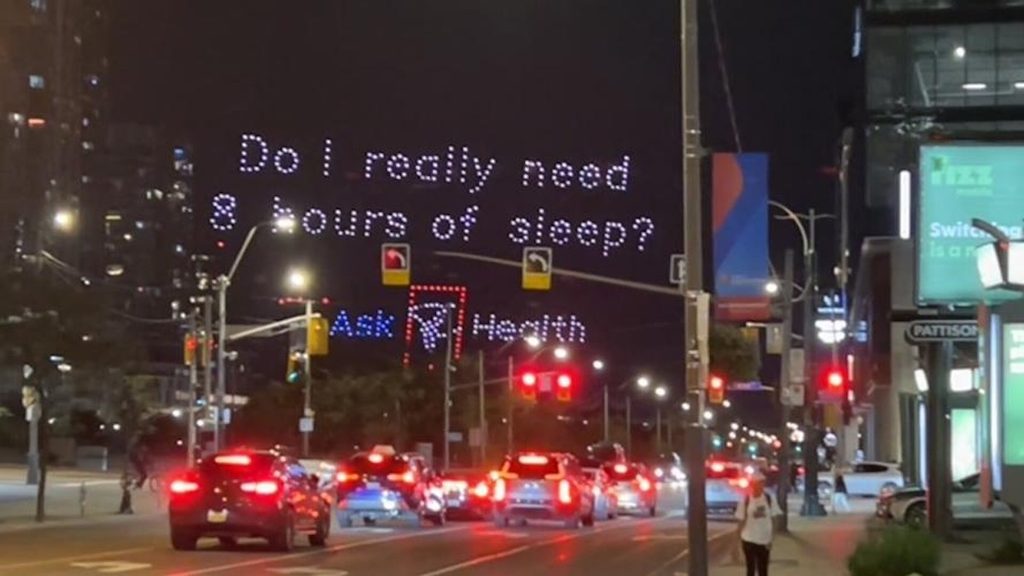
Last Thursday night, more than a thousand drones lit up the sky over Toronto’s waterfront asking residents if they were sleeping enough. Don’t get it twisted, this wasn’t a public service announcement. It was an ad for PC Health’s new chatbot, built by Loblaw, the same corporation that owns Shoppers Drug Mart. Fifteen minutes of glowing questions ending in a QR code, hovering over Fort York like the sky itself had been rented out. This kind of creep doesn’t stop on its own. It stops when we name exactly who’s behind it: Loblaws. Shoppers Drug Mart. PC Health. Per Bank. Doug Ford. That’s who put ads in our sky.
As expected, the company is trying to soften this now that the blowback has landed. A Loblaw spokesperson called it a way to “illuminate moments of uncertainty.” That’s not what it was. It was an ad, big, unavoidable, impossible to opt out of, placed somewhere none of us have ever had to defend before: over our heads, at night, in a shared public sky.
This wasn’t a shoe company or a soft drink brand chasing a viral moment. This was Loblaw, a company that already has serious trust issues with the Canadian public. Bread price fixing, anyone? Record profits while people choose between groceries and rent? And on top of all that, it’s a health company, whose entire business model depends on people believing it cares whether they’re okay. A drone show interrupting people’s sleep to ask if they’re sleeping enough didn’t just fail to help with that trust problem. It showed exactly how little they care about it in the first place.
The irony would almost be funny if it weren’t so cynical.
Why the Loblaw drone ad exposes a regulatory gap nobody’s closed
I get it, we’re so used to ads in every aspect of our life that it might be easy to just shrug and go with it, but I’m asking you to stick with me me here as we travel down this slippery slope.
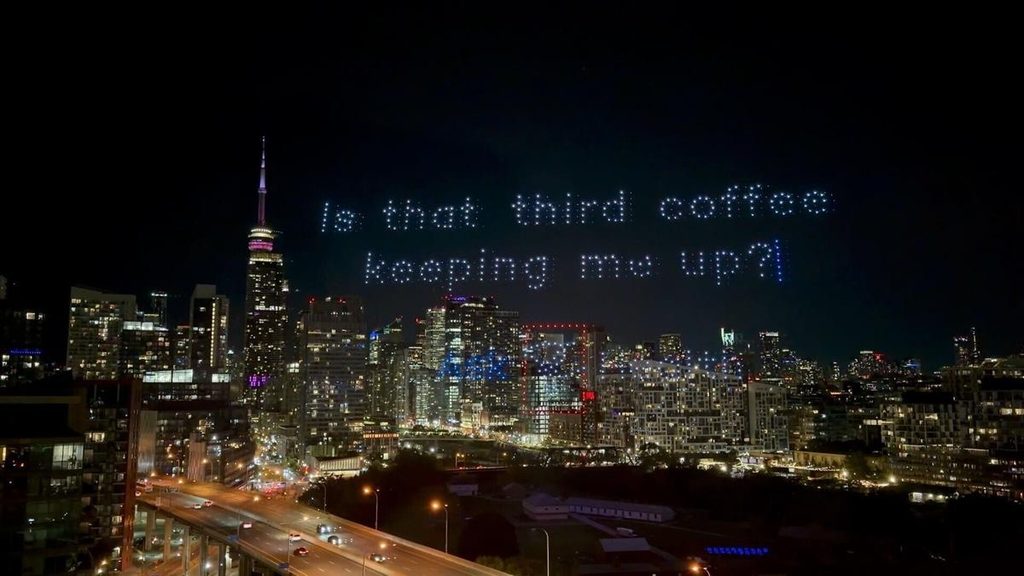
Static billboards are regulated. There are rules about size, brightness, where they can go near homes and hospitals and schools. A swarm of over a thousand drones, dynamic, moving, visible for kilometres, currently answers to none of that. Transport Canada governs airspace for safety, not for whether a corporation can turn a night sky into a commercial for itself. That’s a gap, and Loblaw knew it was a gap when it flew those drones, because if there’d been a rule against it, there would have been a permit application that got rejected instead of a press release. This is a company betting, correctly, that it’s easier to ask forgiveness than permission. Fly the drones first, absorb a bad news cycle, and let the backlash do the work of finding the loophole for you instead of asking anyone before you use it.
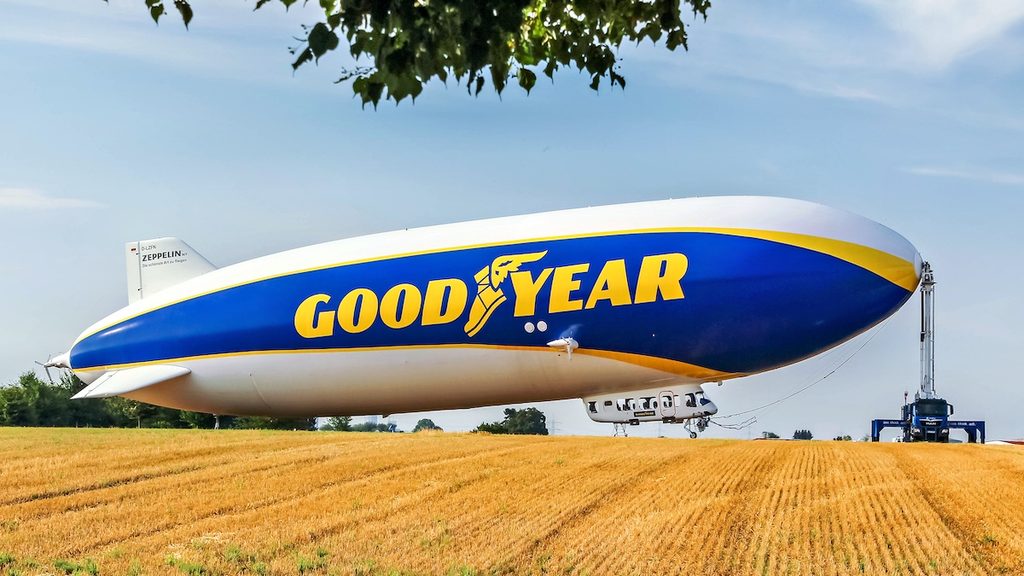
I can already hear the inevitable pushback. Oh Candace, you’re being dramatic, the sky has been used for advertising for a hundred years. Planes. Blimps. Skywriting. Parachutists trailing banners over the beach. And sure, that’s all true. None of it is new. But notice where those ads showed up. A banner plane over a beach or a stadium is flying over people who chose to be somewhere a captive audience already gathers. A blimp circling a football game isn’t sneaking up on anyone at eleven at night near their own front door. This drone display went up over Toronto’s waterfront, close to a historic site, in a downtown core people live in, not a place they opted into knowing they’d be marketed to. And a banner plane can drag one sign along one flight path. Over a thousand coordinated drones can build a shifting, animated, block sized display with a precision no fabric banner has ever come close to. Skywriting has had a hundred years of regulation catching up to it. This technology is getting cheaper every year while the rules are still stuck in a grey zone, which is exactly why Loblaw got to try it first and apologize later instead of asking permission before it happened.
We already live inside more advertising than any generation before us has had to filter out. It’s on our phones before we’ve opened our eyes in the morning. It’s in the elevator, the gas pump, the bottom of a receipt, the fifteen seconds before a video we didn’t ask to watch. For heaven’s sake, some people even get served ads on their refrigerators. We have spent years building smaller and smaller pockets of resistance: ad blockers, paid subscriptions just to make the banners stop, entire industries built around helping us pay to be left alone. And the response from companies with enough capital has been to go bigger. If we’re blocking the ground, they’ll take the sky.
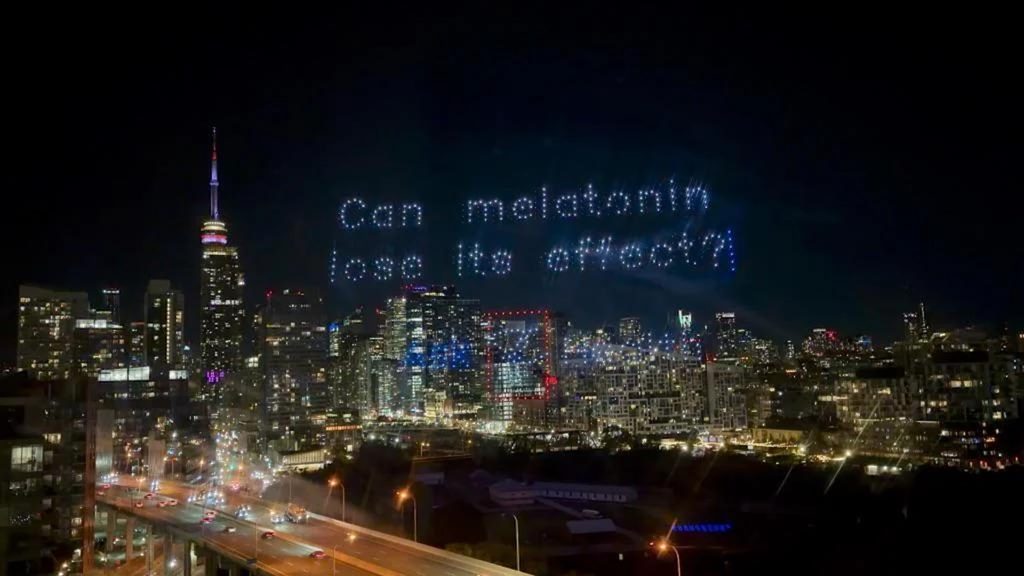
That’s the part that should scare people more than it seems to. Not the drones themselves. The precedent. Once one company proves the sky is available and the backlash fades in a news cycle, the next one has a case study. And the one after that. There is nothing about this that gets rarer once it’s normalized. It gets cheaper, more common, and eventually as unremarkable as a bus shelter.
What Capitalism Running Roughshod Over Democracy Actually Looks Like
This is what capitalism running roughshod over democracy actually looks like in practice. A thousand small impositions nobody voted for. Not one citizen looking up at that drone display thought finally, an ad in the night sky. Not one of us has ever said we’d love a data centre in our backyard, chewing through the local power grid and water supply so a company can train its next product faster. Not one person has sighed with relief at the thought that they might pay more than the stranger next to them for the same item, because an algorithm decided their phone said they could afford it. Nobody asked for any of this. It gets built anyway, and then we’re told to sit down and be grateful for the invasion, er, sorry I mean innovation. Democracy is supposed to mean we get a say in the systems that shape our daily lives. What we actually have is a handful of companies deciding what gets imposed on us next, and a government too cozy with them to ask whether it should.
To be clear, I don’t think this is really about drones. I think it’s about a pattern we keep letting corporations set for us instead of the other way around: they take a little more space, a little more of our attention, a little more of what used to be unclaimed, and we’re left doing the work of drawing the line after the fact instead of before. The public didn’t get a say in whether its night sky was for sale. We found out the way we finds out most things now, after the decision had been made and monetized.
And Loblaw isn’t a company operating at arm’s length from the people who are supposed to hold it accountable. In April, Doug Ford publicly rejected calls to ban surveillance pricing, the practice of grocers using your own data against you at checkout. The very next day, his calendar shows he hosted Loblaw CEO Per Bank at his private home in Etobicoke for a meeting that was never disclosed. It only came out months later, through freedom of information records. NDP leader Marit Stiles called the timing no coincidence, and it’s hard to argue with her. Nobody needs to prove a backroom deal to notice that the premier killed consumer protection legislation the same week he was hosting the CEO who benefits most from it staying dead. That’s the same climate that let a company put ads in our sky and call it innovation. When the people who are supposed to set limits on corporate power are having private dinners with the CEOs instead, don’t be surprised when the limits stop showing up.
This is also, infuriatingly, a healthcare story, and healthcare in Canada is supposed to be free. Universal. Something we don’t have to bargain for at checkout. And yet the number of Ontarians without a family doctor has climbed from 1.3 million in 2016 to a projected four million plus by the end of this year. That didn’t happen by accident. It happened while the Ford government kept increasing funding to private clinics and letting public hospital budgets run into deficit, a pattern the Ontario Health Coalition documented again just this week. Starve the public system long enough and the gap it leaves behind becomes an opportunity. That’s exactly the gap PC Health’s chatbot is stepping into, posing as convenience and innovation, when what it actually represents is a corporation filling a hole in our healthcare system that Doug Ford’s government dug on purpose.
And let’s not pretend Loblaw spent that kind of money on a fleet of over a thousand drones purely out of the goodness of its tiny corporate heart, to helpfully inform Canadians about a free service. Companies do not drop that much on a fifteen minute stunt without expecting a return that dwarfs the cost. A chatbot is not a charity. It collects data. It builds a direct line into your health anxieties at eleven at night, then points you toward a company that also happens to sell you groceries, medication and everything else in between. If they’re not making money on the other side of “free,” what exactly was the pitch to their shareholders?
If a health company can’t figure out how to build trust without hijacking the sky to do it, that tells you something about the distance between what these companies say about caring for us and what they actually do when they think a stunt will trend. I’m not interested in the apology tour that inevitably follows a backlash like this one. I’m interested in the fact that it took a backlash at all for anyone to ask whether this should have happened in the first place.
This spot reserved for Doug Ford
This is me putting words in Doug Ford’s mouth before he’s even said them, because I’ve seen this movie before. My best guess at the eventual dismissal: folks need to relax, it’s just lights in the sky, we’ve got bigger fish to fry. The usual tsk tsking that makes the public sound precious for objecting to a corporation renting out the night sky. He hasn’t said this. He will say something like it.
The sky wasn’t asking to be sold. We didn’t get a vote. And “sorry, it trended badly” isn’t the same thing as “we won’t do it again.” The Loblaw drone ad will fade from the news cycle within a week, the way these things always do, unless we keep naming exactly what it was.
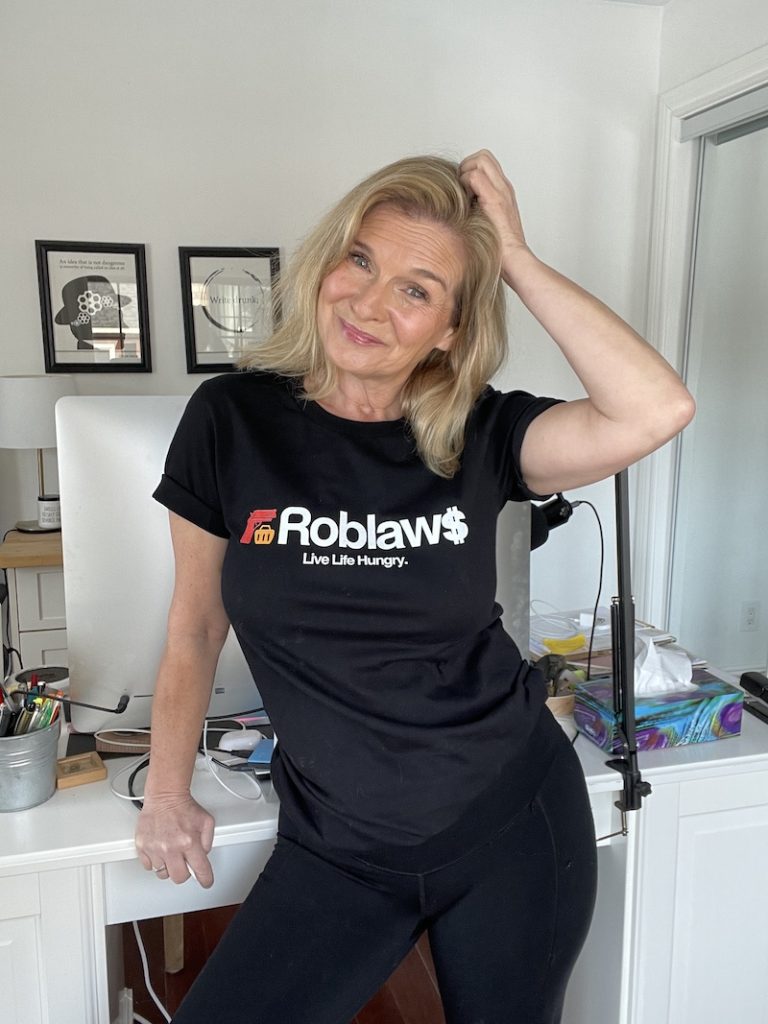
I’ve been boycotting Loblaw for six years now, Shoppers for three. Not because I think one person skipping the self checkout brings down a corporation, but amongst many other transgressions I’m not interested in funding a company that thinks my night sky is inventory. This Loblaw drone ad is the clearest reason yet to join me. Let’s take it back.