Why is there a backlash against women’s rights right now, at the exact moment the largest transfer of wealth in history is about to land in women’s hands? I don’t think it’s a coincidence, and it’s something I’m simply not seeing talked about enough.
I’ve known about this coming great wealth transfer for years now, having it come up in many conversations here at What She Said. And the message has always been positioned as an exciting new frontier for women. And while I agree, there has always been a niggling doubt in the back of my mind. Because the patriarchy is not just going to let this happen. Money is power, and power is a drug to the patriarchy. They’re not going to let it slip away without a fight.

Over the next twenty years, an estimated $124 trillion is expected to change hands in North America as the Baby Boomer generation passes on its wealth. Most of it is going to women. In Canada, women controlled 38 per cent of the country’s wealth in 2020 and are projected to control close to 47 per cent by 2030, including roughly $1 trillion in inheritance over the next decade. This isn’t a niche financial story. It’s one of the biggest shifts in economic power in modern history, and it’s happening in the same decade that reproductive rights, protections for trans people, and basic gains women fought for over the last fifty years are being actively rolled back.
Am I a conspiracy theorist? I’ll tell you what. Take this walk through the timing of this current backlash with me, and tell me at the end if you don’t see it too.
Jump to a Section
We Didn’t Just Get Lucky
The headline number is $124 trillion by 2048, according to Cerulli Associates, and roughly $54 trillion of that will move first between spouses, with over 95 per cent of it landing with women because women statistically outlive their husbands. Call that the horizontal transfer. Then there’s the vertical transfer, the money that moves from parents to adult children, and women are positioned to receive the majority of that too.
And I can hear the knuckle draggers already, but women didn’t earn that. Please sit down.
This is a narrative that is so insidious that many women even believe it. It’s so tempting to file this under good fortune, a demographic accident of longer female lifespans meeting a wealthy generation’s exit. That’s the version the financial industry tells, and that the patriarchy wants us to buy into. We didn’t earn this, so we don’t deserve it. And sister, if there’s only one thing you walk away with today, it’s this, we earned it. Man oh man, have we earned it.
This Wealth Was Earned
The financial industry leaves out something important: a large share of that money was never just men’s to pass down. Statistics Canada found that women contribute 35.8 per cent of Canada’s GDP once unpaid labour is counted, against men’s 47.5 per cent, and women account for over 60 per cent of all unpaid household work hours. That unpaid work, the childcare, the elder care, the running of a household that let a paid career happen at all, has been valued at somewhere between $516.9 billion and $860.2 billion a year in Canada alone, or up to 37 per cent of the country’s entire GDP.
That work though was never on payroll. It never showed up in a pension calculation or a portfolio statement. But it was the infrastructure that made the paid wealth possible, and for most of history, the legal and financial systems ran entirely through men, so the asset never carried a woman’s name until he died. Getting that inheritance isn’t some windfall. It’s finally getting our names on something we helped build the whole time.
Backlash Isn’t a Theory, It’s a Pattern
So women are about to hold more money and more economic power than at any point in recorded history, and at the same time, rights that took generations to win are being pulled back. Susan Faludi called it backlash in 1991, describing it as an assault on women’s gains that seeks to restore a patriarchal status quo whenever progressive social change threatens it.
This isn’t theoretical. It’s playing out in three places at once, right now:
In the United States:
- Project 2026, the Heritage Foundation’s follow up to Project 2025, calls for embedding fetal personhood across federal agencies and stripping remaining federal protections for reproductive freedom.
- The administration reinstated and expanded the Global Gag Rule, cutting funding to any organization that so much as mentions abortion. Guttmacher estimates the cuts could leave 47.6 million people worldwide without access to family planning.
- The Department of Veterans Affairs moved to rescind the rule allowing VA facilities to provide abortion care to veterans in cases of rape, incest, or threat to life.
- There’s an active push to reclassify standard contraceptives, including the pill and IUDs, as forms of abortion.
In Canada:
- In 2025, Prime Minister Mark Carney’s new cabinet eliminated the Minister of Women and Gender Equality and Youth position, along with the Minister of Diversity, Inclusion and Disability.
- Ottawa denied funding to Abortion Care Canada in January 2025, a decision advocacy groups say will damage abortion access across the country.
- Women and Gender Equality Canada, the federal department tasked with protecting the rights of women, girls, and 2SLGBTQI+ communities, is being asked to find budget savings even as global funding cuts put more pressure on the services it supports.
Around the world:
- At this year’s UN Commission on the Status of Women, Secretary General António Guterres described the moment as “a siege against women,” pointing to a broad reversal of reproductive rights and gender equality initiatives across member states.
- South Korea has moved to abolish its Ministry of Gender Equality and Family. Argentina shut down its own Ministry of Women, Genders, and Diversity in 2024, ending funding for its national domestic violence hotline.
- Hungary has banned Pride events, Slovakia and the UK have both legally redefined sex as strictly binary, and Burkina Faso and Trinidad and Tobago have moved to criminalize same sex relationships.
More recent research describes this as organized pushback, not isolated incidents, driven by identifiable political movements and structural anxieties about who holds power and who doesn’t. One recent analysis puts it plainly: as economic systems integrate women more fully, political systems in many countries push back against the redistribution that comes with it. The wealth transfer and the rights rollback aren’t running on separate tracks. They’re two effects of the same cause. Power is shifting, and whoever currently holds it is resisting the shift.
It’s a System, Not a Man
I know our kneejerk reaction is often to blame the nearest man, but men, individually, are not the problem. Plenty of men are neutral on all this (not helpful at all), or actively pulling for us (thank you to them). But the backlash isn’t coming from individual opinions, it’s coming from patriarchy as a system, an entrenched set of institutions, laws, and norms that has spent centuries organized around male control of money and decision making. Systems don’t care what any one person inside them believes. They just reallocate resistance wherever their position is threatened.
That’s the part that makes this predictable instead of paranoid. Power concentrated somewhere is rarely surrendered without a fight, no matter how quietly or fairly it’s being redistributed. The fight we’re watching right now, on reproductive rights, on trans rights, on the rollback of protections that took decades to win, is what that resistance looks like in real time, arriving on schedule with the biggest transfer of financial power women have ever seen.
Related Reading
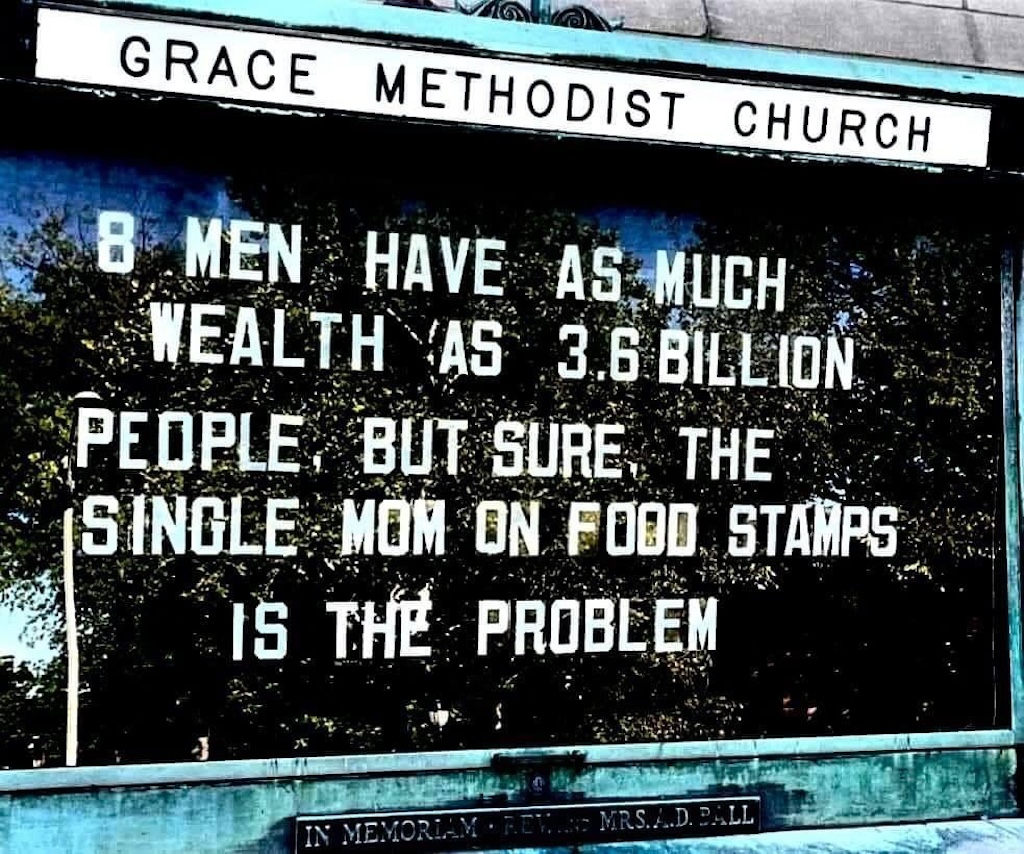
Are Billionaires Good for Society? No, and Here’s Why
Same system, different wallet. No one becomes a billionaire alone either, that fortune is built on collective labour too, and the system protects it just as fiercely as it resists handing power to women.
Read the PieceYou Were Never “Just”
Often we’re stuck inside the jar, too close to the label to read it. It’s not until someone points at the belief and names where it came from that we can actually start taking it apart. So let’s name a few.
You were never “just” a stay at home mom. You were a powerful part of an economic engine that could not run without you.
You were never “just” bad with money. You were kept out of the room where the decisions got made.
You were never “just” supporting his career. You were building the foundation his paycheque stood on.
You were never “just” the one who stepped back to care for the kids, or the parents, or both. You were absorbing a job the system refused to pay for.
You were never “just” waiting for an inheritance. You were finally getting your name on what you built.
The patriarchy needed us to believe the small version of ourselves, because a woman who thinks she’s “just” a wife, “just” a mother, “just” someone who never learned the numbers, doesn’t ask why her name isn’t on the account. The moment we stop believing the small version, the whole rest of this article stops being theory and starts being personal.
What Happens When Women Hold the Money
The part worth remembering through all of this is that if the money actually lands and stays in our control, the outcomes tend to be better for everyone around us. Decades of research on household spending consistently show that when women control income, they direct more of it toward children’s education, food, and health than men do in the same position. In some studies, income controlled by mothers has been linked to child survival probabilities improving by a factor of twenty compared to income controlled by fathers. Most of that research comes from lower income and developing economies, where the contrast in spending priorities is sharpest, but the direction of the pattern holds across income levels, even if what it changes looks different at the top end of the wealth curve than it does at the bottom.
Money is power. And knowing that, sitting back and waiting for $124 trillion to land in our laps isn’t a strategy, it’s an invitation for the systems built to keep that money moving right back through male hands to do exactly that.
So here’s what actually holding onto it looks like:
- Keep it in your own name. Get on the accounts, the estate plan, the investment conversations, now, not after a death or a divorce forces you into the room. Empathy’s research found women are two to three times more likely than men to be left out of their own family’s financial planning until it’s already too late to ask questions.
- Vote like your bank account depends on it, because it does. Every rollback on this list, the eliminated ministries, the defunded clinics, the redefined protections, happened through elected governments and appointed officials. That’s a lever you actually have.
- Run for the seats making these decisions. Boards, city council, party nominations, school trustee. Political power and economic power move together in this story. If we only chase one, we leave the other one for someone else to hold.
- Organize instead of absorbing it alone. Faludi’s own research is clear that backlash escalates more against isolated gains and struggles than against organized ones. A woman quietly managing her inheritance is easy to ignore. A network of women doing it together, and talking about it loudly, is not.
This is the part of the story we actually get to write ourselves.
So, Do You See It Too?
Follow the money is a cliché for a reason, and under the patriarchy, if you’re looking for rot, it’s almost guaranteed to lead you there.
I asked you at the start if you thought I was a conspiracy theorist. Walk back through it with me. A $124 trillion transfer of wealth is landing in women’s hands over the next twenty years, most of it money we already earned through decades of unpaid labour that never showed up on a balance sheet. At the exact same time, the rights we spent generations fighting for are being stripped back, piece by piece, in courtrooms and legislatures across North America. That’s not two unrelated headlines sharing a decade by accident. It’s what happens whenever power starts to move and the people holding it decide not to let go quietly.
I’m not asking you to panic about it. I’m asking you to notice it, because the moment you see the pattern, you stop being managed by it. This wealth is coming. So is the fight to keep us from actually using it. Knowing that in advance is the only real advantage we’ve got.
Why Is There a Backlash Against Women’s Rights Right Now? FAQ
Yes. Cerulli Associates projects $124 trillion will change hands in North America by 2048, with the majority going to women, largely through spousal inheritance and parent to child transfers.
Is the wealth transfer happening in Canada too?
Yes. TD’s Women in Philanthropy report found Canadian women controlled 38 per cent of the country’s wealth in 2020, projected to reach close to 47 per cent by 2030, including about $1 trillion in inheritance over the next decade.
Backlash theory, first named by Susan Faludi in 1991, describes organized resistance to women’s social and economic gains that aims to restore a patriarchal status quo whenever that status quo feels threatened.
Researchers studying both trends argue they’re connected rather than coincidental: as women gain more economic and political power, the political systems built around male control of resources push back against that redistribution.