Yesteryear is about a tradwife influencer, but it left me thinking about the audience. Influencer culture, outrage and online pile ons only work because we keep watching, commenting and sharing, and I think we need to own our part in it.
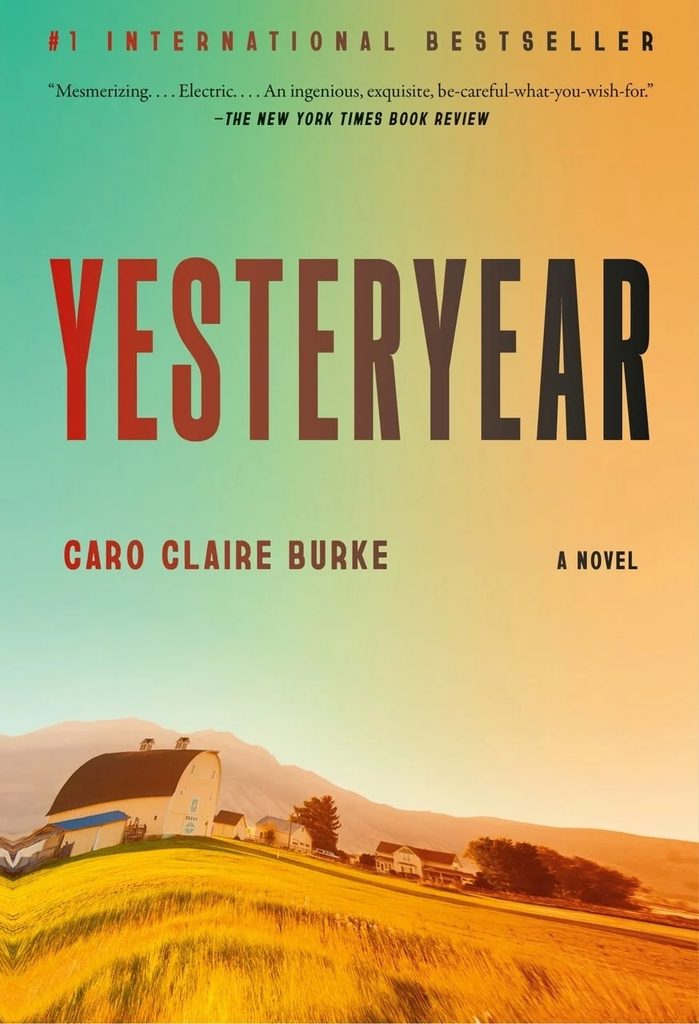
I just finished reading Yesteryear by Caro Claire Burke, and I have to say, I love books that leave me thinking long after I’ve turned the last page. This one has had my head spinning for days.
Before I go any further, I should probably clarify that I’m not a book reviewer. That’s not my wheelhouse, and there are plenty of people far more qualified and considerably smarter than me when it comes to dissecting literature, analysing writing and deciding whether a book deserves five stars.
But I do love talking about books that make me think. The ones that stay with me after I’ve finished reading, that introduce perspectives I might not otherwise have considered or nudge my mind into places it might not have wandered on its own.
Sometimes a book is less about the story itself and more about the conversations it starts in your head. That’s what happened with Yesteryear.
There was plenty of buzz around this book when it was released, and for good reason. It’s a fascinating read, and without giving anything away, I will say that I did not see the ending coming. For much of the book, I was trying to make sense of what was happening through the lens of science fiction, convinced I was reading some sort of time-travel story. Let’s just say there is considerably more going on here.
On the surface, Yesteryear is about Natalie, a wealthy American tradwife influencer who has built an online following around an idealized version of traditional family life. She has the beautiful home, the husband, the children, the faith and the carefully constructed image of domestic perfection. But the reality behind the Instagram posts is considerably more complicated.

Natalie is not an especially likeable character. In fact, she’s often a terrible person. But I found myself thinking about how much of who she became was shaped by the people and circumstances around her. Her mother, her upbringing, religion, wealth, privilege and the particular brand of American mythology that runs through the story all contribute to the person she is.
The book also explores two very different paths women might take in trying to find their place in the world. Natalie’s embrace of traditional womanhood is contrasted with Reena, her former college counterpart, who pursued a very different version of success. Neither woman’s experience is particularly straightforward.
There is a lot to think about here, particularly when it comes to the stories we tell ourselves, the stories we sell to other people and the distance between the two.
But what has stayed with me most is the book’s examination of social media and the identities we construct online.
And that got me thinking about something else.
Guys, I Think We’re the Problem
Everybody seems to hate influencers these days. Content creators, celebrities, people who make a living sharing their opinions, their outfits, their homes, their relationships and sometimes just the mundane details of their everyday lives.
We complain about influencer culture. We roll our eyes at the latest celebrity scandal. We shake our heads at cancel culture and the seemingly endless parade of people being called out for something they’ve said or done.
But here’s a question: Who is watching? Who is commenting? Who is sharing the outrageous video with a friend? Who is clicking on the scandal, reading the takedown, joining the discussion and making sure the story reaches an even bigger audience?
Us.
We’re the audience. We’re the consumers. We’re the reason the machine keeps running.
And I think it’s time we acknowledged that we might be a considerably bigger part of the problem than we’re willing to admit.
We can’t spend our days criticizing influencer culture while simultaneously rewarding it with our attention and then pretend we’re somehow separate from the problem.
Influencers wouldn’t have an audience without us. Celebrity gossip wouldn’t be an industry without us. The endless cycle of outrage, public criticism and online humiliation wouldn’t be nearly as lucrative without millions of people willing to participate.
We haven’t just created a culture of online performance. We’ve created an audience that demands it, rewards it, judges it and then complains about it.
We’ve Become Professional Online Critics
And we don’t just watch other people’s lives. We judge them.
Someone posts a photograph and we dissect what they’re wearing. Someone makes a comment that doesn’t land quite right, and we pile on. Someone forgets to include captions or a voiceover in a video, and suddenly they’re an enemy of the people.
We forward embarrassing videos to friends, share screenshots of people’s mistakes, leave terrible comments and join conversations about strangers as though we’re somehow entitled to an opinion on every aspect of their lives.
Just look around social media for five minutes. The evidence is everywhere.
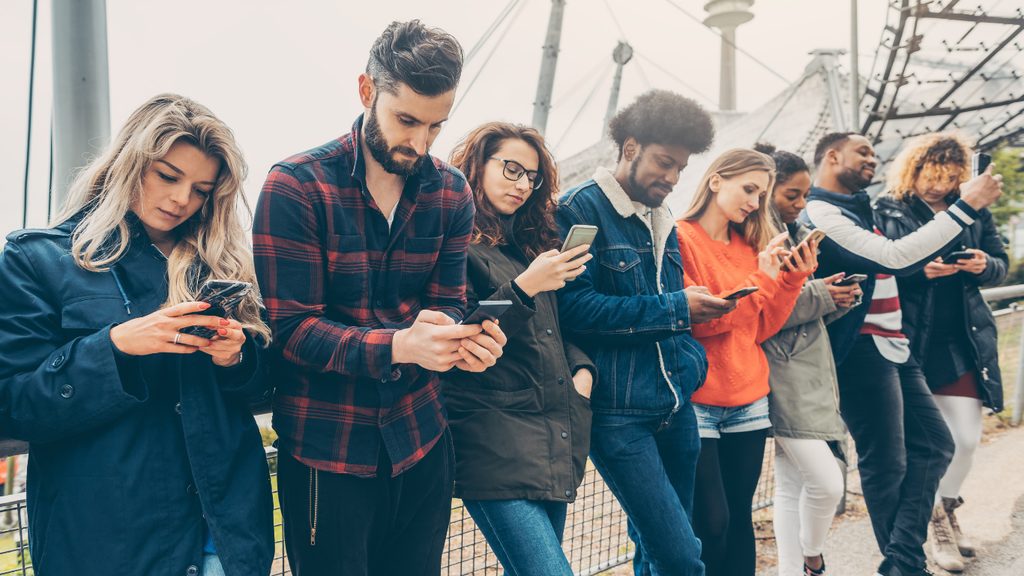
We have created a culture in which people are simultaneously encouraged to put themselves out there and punished for doing so. We demand authenticity, but we’re often merciless when someone shows us something we don’t like. Then there’s the pedestal. We build it, we put someone on it, and the moment they get a little too big for our liking, we start looking for the best way to knock them off.
And for what? Entertainment? A little moment of superiority? The satisfaction of knowing that someone else has made a bigger mess of things than we have? We’ve become so accustomed to commenting on other people’s lives that we’ve forgotten there’s an actual person on the other side of the screen.
Of course, there are times when people deserve to be called out. Having a public platform doesn’t make someone immune to criticism or accountability. There are genuinely harmful things people say and do, and sometimes speaking up matters. But I’m sorry, misspelling a word shouldn’t mean you get pulled into the proverbial public square for a flogging.
There’s a difference between accountability and public humiliation. And I think we’ve become increasingly comfortable confusing the two.
Are We Just a Little Bit Jealous?
I also wonder how much envy plays into our relationship with influencers and content creators.
Not for everyone, certainly, but I suspect it’s there for a lot of people.
Think about it. Someone figures out how to monetize the mundane. They share their home renovations, their outfits, their cooking, their parenting, their opinions or even just the ridiculous things that happen in their everyday lives. Somehow, they’ve turned something that the rest of us might consider ordinary into an income stream.
And good for them.
I’m not suggesting every influencer is producing meaningful content or that every person with a large following deserves our admiration. There is plenty of ridiculousness online. But there is also creativity, entrepreneurship, education, humour, community and some genuinely useful information.
Still, I wonder whether some of our criticism comes from the fact that someone else has figured out how to make money doing something we might like to do ourselves.
It’s easier to dismiss someone as ridiculous than to acknowledge that they’ve built a successful business around something we’re watching for free.
The Algorithms Know Us Better Than We Think
We can’t talk about social media culture without talking about the algorithms that help create it.
It’s tempting to blame social media platforms for everything we see, and certainly they have enormous influence over what appears in our feeds. But those algorithms aren’t operating in a vacuum. They’re learning from us.
What we watch, what we like, what we share, what we comment on and, perhaps most importantly, what keeps us scrolling all contribute to what we’re shown next.
If I spend an afternoon watching videos about celebrity scandals, I’ll probably see more celebrity scandals. If I engage with posts criticizing a particular influencer, I can expect to see more content about that person. If I repeatedly stop to read an argument, the algorithm has another signal about what holds my attention.
We are, as they say, building our algorithm brick by brick.
It’s almost like manifestation, but instead of putting our intentions out into the universe, we’re feeding information into an algorithm. We give something our attention, engage with it and suddenly it seems to be everywhere.
Of course, there’s an important distinction. The algorithms aren’t simply giving us what we want. They’re also influencing what we see, what we think about and what we might want next.
It’s a feedback loop, and we’re all participating in it.
So the next time we complain about how much negativity, outrage or ridiculousness is appearing in our feeds, perhaps we should consider what we’re doing to encourage it.
Do We Actually Know These People? Parasocial Relationships Explained.
This brings me to something else that I find particularly fascinating about social media: parasocial relationships.
If you’re unfamiliar with the term, a parasocial relationship is a one-sided connection we develop with someone we don’t actually know. It might be a celebrity, an influencer, a podcaster or even someone whose daily Instagram stories have become part of our routine.
We follow someone for months, sometimes years. We see their homes, their children, their holidays, their relationships and their daily routines. We hear about their successes and their struggles. They talk directly to a camera, sometimes sharing things that feel incredibly personal.
Eventually, we start to feel as though we know them.
We develop opinions about their marriages. We become invested in their careers. We feel disappointed when they make decisions we don’t agree with. Sometimes we even feel betrayed.
But we don’t know these people. We know the version of themselves they’ve chosen to share with us. That’s a pretty important distinction.
The relationship feels personal, but it isn’t reciprocal. They don’t know we’re watching. They don’t know what we think about their latest relationship announcement or the parenting decision we spent twenty minutes discussing with a friend.
Yet somehow we’ve become emotionally invested in people who have no idea we exist.
Authenticity Doesn’t Mean Giving Everyone Access
While we’re busy watching everyone else, we’re also constructing our own little versions of reality.
I try to present a fairly authentic version of myself. But I’m not going to show up on social media with every unpleasant thought, every bad day or every unflattering side of my personality. Conversely, I’m not going to filter all my shares either so you only see the best version of me. I can be genuine without sharing everything. I can be honest without making my private life public property.
Lately, though, there seems to be an increasing demand for authenticity online. People show up unfiltered, sharing their most personal struggles and sometimes presenting the very worst parts of themselves as proof that they’re being “real”. I’m not convinced oversharing is the same thing as authenticity. I do think we’ve simply created another performance.
Once upon a time, the performance was the perfectly curated holiday, the immaculate kitchen, the successful career and the happy family. Now, sometimes, the performance is how messy, chaotic, unfiltered and unapologetically imperfect we can be. Both are curated. Both are choices about what we want other people to see, and neither necessarily tells us who someone really is.
I don’t owe strangers every detail of my life to prove that I’m being authentic, and neither does anyone else.
I’ve been working in the online space since the days of mommy bloggers, and the attention I’ve watched people get from becoming super popular has always held me back from pursuing it as fully as I could. I’ve had brushes with virality, with articles, TikToks and podcasts, and while some people would see that as the moment to keep going and grow bigger, I always shrink back. I once had a video go viral on TikTok, racking up thousands and thousands of views, likes and comments every minute, and I was sick to my stomach.
When Natalie has her big moment, she seizes the opportunity to essentially monetize every aspect of her life. I’ve had glimmers of that path, and it always makes me want to hyperventilate into a paper bag. It’s an impossible existence that I frankly wouldn’t wish on my worst enemies.
Whatever Happened to a Little Nuance?
I also think we’ve lost the ability to give people a little grace.
I’ve been jumped on for using an incorrect word to describe something when, yes, perhaps another word would have been more appropriate. But sometimes I’m writing a social media post with a character limit. I’m trying to get a thought across in a handful of words, not submit a doctoral thesis for peer review. Give me a break.
Of course words matter. Of course language matters. I’m not suggesting we shouldn’t be thoughtful about what we say or that people shouldn’t be corrected when they get something wrong.
But must every mistake become a referendum on someone’s character?
Can we not recognize that someone can have a good point and express it imperfectly? That someone can hold an opinion we disagree with and still have something worthwhile to say? That two things can be true at the same time? Not every disagreement needs a winner and a loser. Not every poorly chosen word requires a public takedown. And not every person who gets something wrong is a terrible human being.
I miss nuance. I miss the idea that we can disagree, have a conversation, change our minds or simply move on without turning every interaction into a battle.
We’ve created a social media culture where people are afraid to be imperfect in public, while simultaneously demanding that everyone be authentic.
That’s quite the contradiction.
When We Can No Longer Separate the Art From the Artist
Last year, my daughter wanted Ed Sheeran tickets for her birthday. I bought them for his August concert, and then, just two weeks later, he became caught up in a public controversy.
I’m not going to get into whether he deserved the criticism or not. That’s a political discussion that isn’t central to this piece.
What I found interesting was my own reaction.
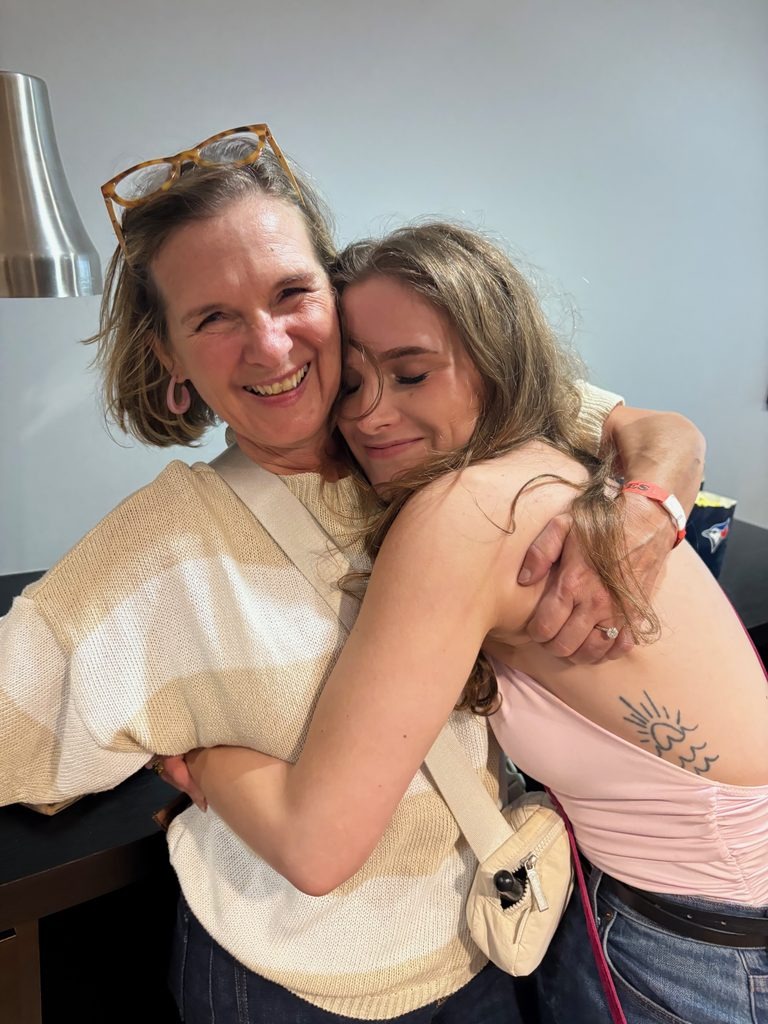
Suddenly, I found it difficult to listen to his music. Songs I’d previously enjoyed now came with an extra layer of baggage. I wasn’t just listening to a song anymore. I was thinking about the person singing it, what I knew about him, what I agreed or disagreed with, and whether I wanted to support him financially in the future.
I’m not suggesting we shouldn’t care who we support. We absolutely should make choices about where our money and attention goes. But I do wonder when we lost the ability to separate our enjoyment of something from our opinions about the person who created it.
Do we really want to investigate the personal beliefs, political opinions and past behaviour of every person involved in making something we enjoy? Do I need to know whether the actor, musician, author or influencer aligns with my own worldview before I’m allowed to enjoy their work?
Perhaps it’s another consequence of those parasocial relationships. We’ve been encouraged to feel as though we know these people, so their opinions and decisions start to feel personal to us. When they disappoint us, it can feel as though someone we actually know has let us down. But we don’t know them. We never did.
Personally, I’m exhausted trying to keep a mental spreadsheet of every influencer and celebrity transgression up to date
We’re All Part of the Performance
Perhaps the most uncomfortable part of all this is that we participate in every side of it.
We curate our own lives, consume other people’s curated lives, judge them for what they share and then criticize the culture that rewards them for sharing it.
We complain about cancel culture but join the pile-on. We criticize influencers for chasing attention while giving the most outrageous ones exactly what they’re looking for. We say we want authenticity, but we’re also quick to judge people when their authentic selves don’t meet our expectations.
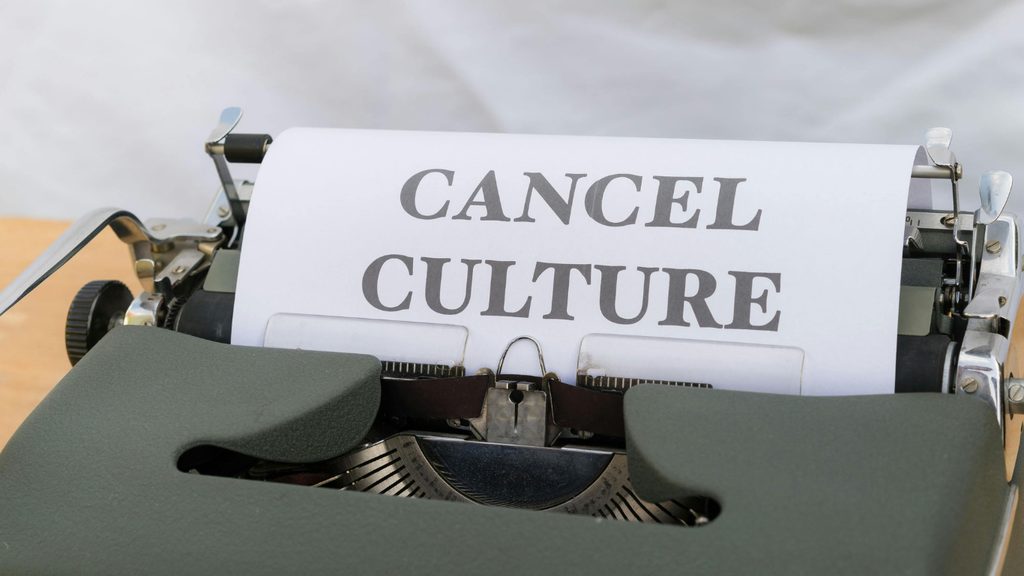
We have helped create an environment where being watched, discussed, admired and criticized has become a form of currency.
And I’m not entirely sure what we expect to happen when we keep paying into it.
I don’t think social media is inherently bad. It has connected people who might otherwise never have met. It has given small businesses a platform, created opportunities for people who might never have had them and allowed important conversations to reach audiences that traditional media often overlooked.
There is plenty of good happening online.
But we can’t acknowledge the good while pretending we have no responsibility for the bad. Every click, every share, every comment and every view contributes to what gets amplified. The algorithms may decide what we see, but our behaviour helps determine what gets rewarded.
Maybe it’s time we spent a little less time worrying about whether the people on our screens are being authentic and a little more time questioning why we’re so invested in them in the first place. Maybe before we share that embarrassing video, leave that particularly nasty comment or join the latest online pile-on, we could pause for a moment and ask ourselves why we’re doing it.
Because the truth is, this culture doesn’t exist without an audience.
And that audience is us.
Guys, I think we’re the problem.
What else are we losing behind our screens?
Performing for an audience is only part of it. I’ve been thinking about what else we give up when more of life happens through a screen.
Influencer culture is the online economy where people build an audience by sharing a polished version of their lives, then earn attention, trust and often money from it. It runs on a loop. They post, we watch, comment and share, and the more we engage, the bigger they get.
Because it feels good, and we don’t like admitting that. When we watch someone overshare, get it wrong or make us cringe, we get a quiet little boost from thinking, “at least that isn’t me.” Psychologists call it downward social comparison, and it’s a bit like slowing down to look at a car accident. Contempt also bonds us. Rolling our eyes together in the comments gives us a sense of belonging and a feeling of being on the right side, which is why pile ons grow so fast. Hating an influencer isn’t the opposite of engaging with them. It’s another way of engaging, and it keeps the whole thing running. If we want things to change, we have to get comfortable owning our part in it.
It’s a one sided bond where we feel we know someone who has no idea we exist. It makes it easy to expect perfection from them and feel betrayed when they slip.
Yesteryear is a 2026 debut novel and dark satire about Natalie Heller Mills, a tradwife influencer who has built a following selling a perfect, nostalgic version of traditional family life. She wakes up in what appears to be 1855 and is forced to live the life she’s been selling. The book is about the gap between the life we perform online and the one we actually live, and it’s what got me thinking about the audience who keeps people like her in business.
Start by noticing what we feed. Watch a little less out of habit, think before we comment or share, and give people room to be imperfect.