I came to coffee late. Forty-four years old, fully formed opinions about most things, and somehow I’d never developed the habit. And then I did, and like everyone else who discovers it, I never once stopped to think about where it came from, or what separates ethical coffee brands in Canada from the ones putting profit before people.
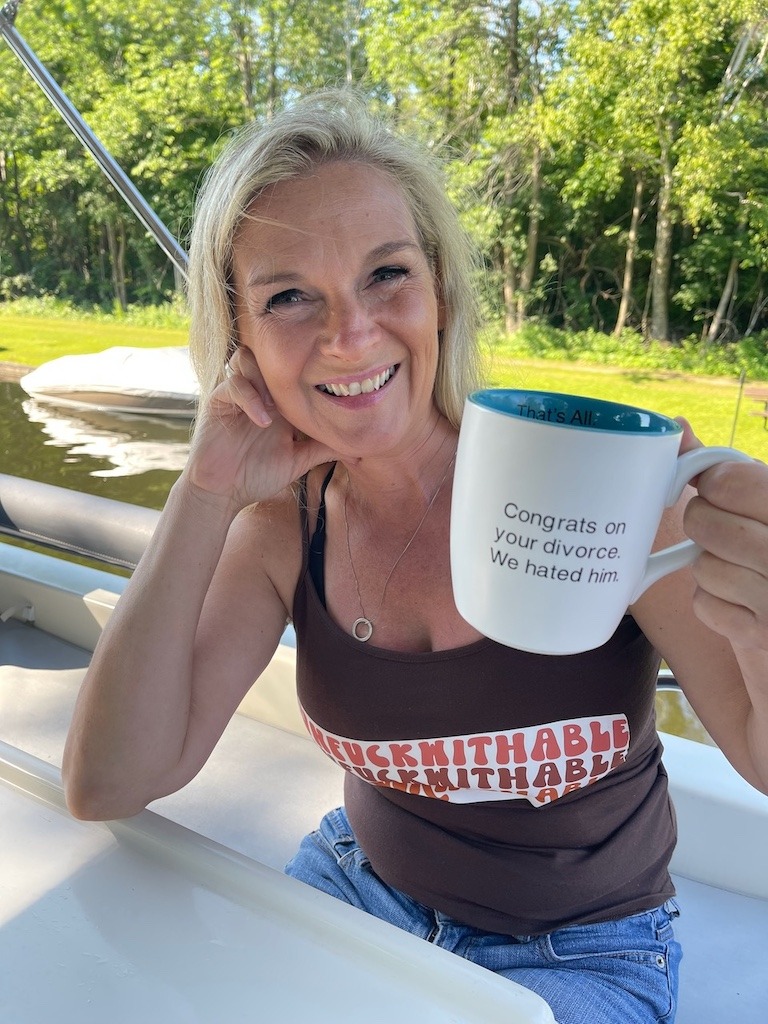
That changed when I started building Girl Trips.
From the beginning, my intention for Girl Trips was to run every decision through a values filter: Canadian companies, ethical sourcing, businesses whose story I could stand behind when women on my trips asked about them. And so when it came to coffee for my very first trip, I found AndBack. Not the other way around.
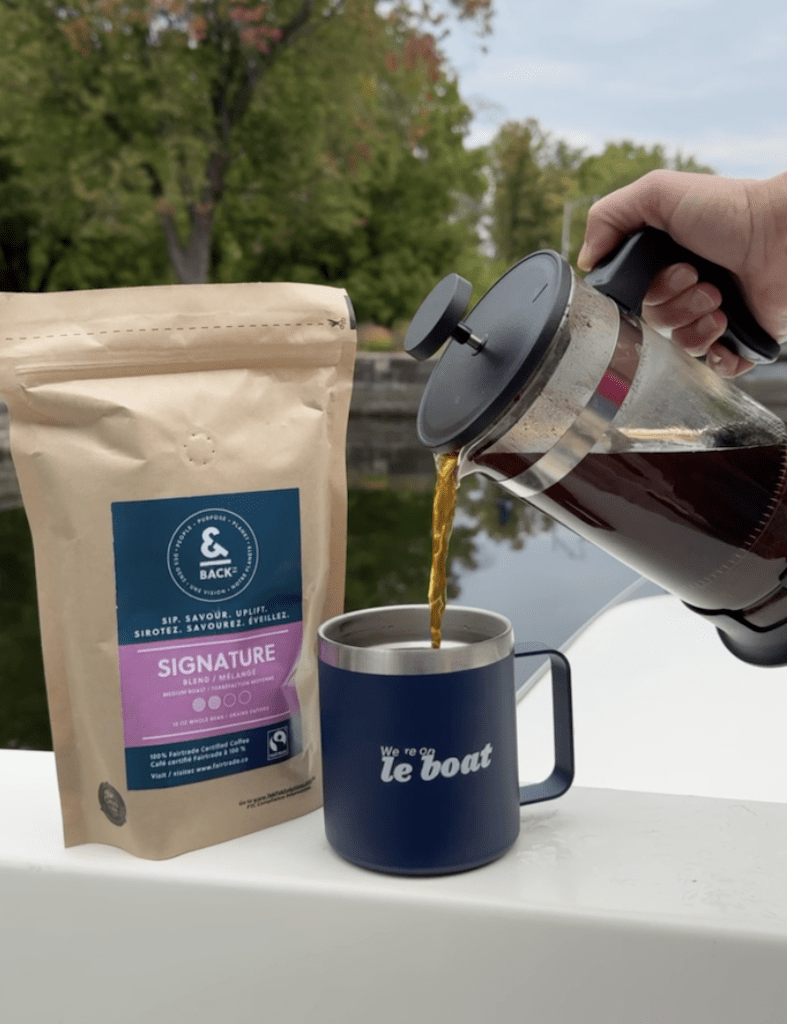
What I didn’t fully appreciate yet was just how much story was sitting inside that bag.
We Treat Coffee Like a Widget
There is a particular kind of blindness that comes with daily convenience. We think about coffee the way we think about electricity or tap water: it appears, we use it, we don’t ask questions. Most of us never think about what makes ethical coffee brands in Canada different from the ones dominating every grocery aisle, but coffee is an agricultural product, grown by human hands along a narrow belt of the equator, and the distance between farm and cup is longer and more complicated than most of us will ever reckon with.
Here is what that distance actually contains.
The majority of the world’s coffee is grown by smallholder farmers, and a significant portion of that labour is done by women. Yet in most coffee-growing regions, women cannot legally own the land they farm. Without title, they cannot access credit. Without credit, they cannot invest in better growing practices or weather a bad season. Without better practices, they earn less per harvest. The cycle is not accidental. It is structural, and it has been running for a very long time.
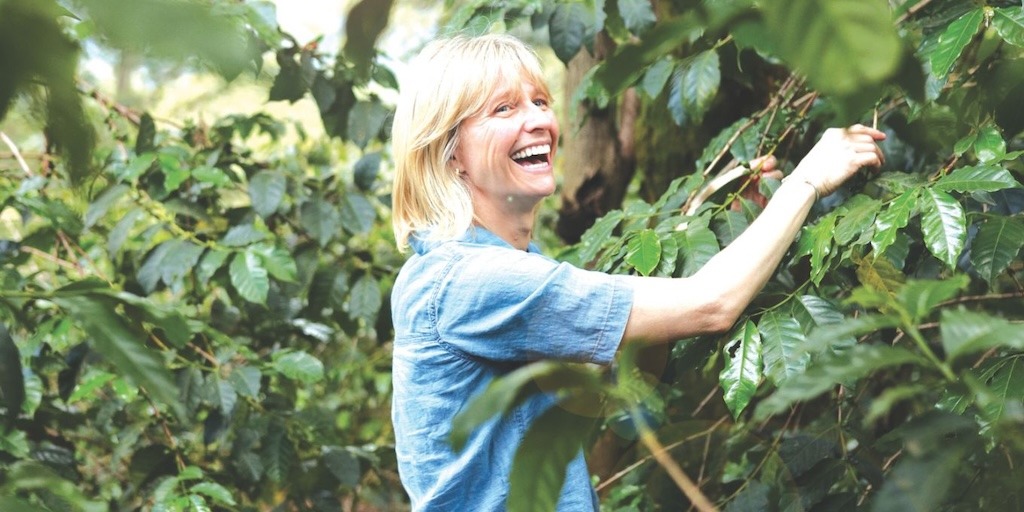
Then add climate change to that picture. Coffee grows within a specific temperature range, and that range is shrinking. Regions that have produced coffee for generations are becoming less viable. Farmers who might have passed land and knowledge down to their children are now watching that future narrow. If farming coffee stops being a dignified way to earn a living, farmers will grow something else. And the world will have a coffee problem it wasn’t prepared for.
None of this is visible when you press the button on your machine in the morning.
From Beads to Beans: What Drew me to Roxanne Joyal
Roxanne Joyal has spent more than 30 years working in the business of women’s economic empowerment. Stanford. Oxford. A Rhodes Scholarship. Time at the Supreme Court of Canada. And then, in 1996, a gap year that changed her direction entirely.

She spent that year volunteering in Thailand and Kenya, and what she saw in both places was the same thing: women doing enormous amounts of work with almost no access to the structures that would let them benefit from it. She didn’t know yet what shape her career would take, but she knew that was the problem she wanted to spend her life on.
What followed was the Rafiki bracelet project, a social enterprise that connected women artisans in Kenya, the Amazon, and elsewhere to global retail markets. Six million beaded bracelets made their way out into the world. The women who made them received financial literacy training alongside their income, so the money they earned could be redeployed into micro-enterprises in their communities. It worked. And then the pandemic arrived, brick-and-mortar retail collapsed overnight, and Roxanne found herself at a crossroads.
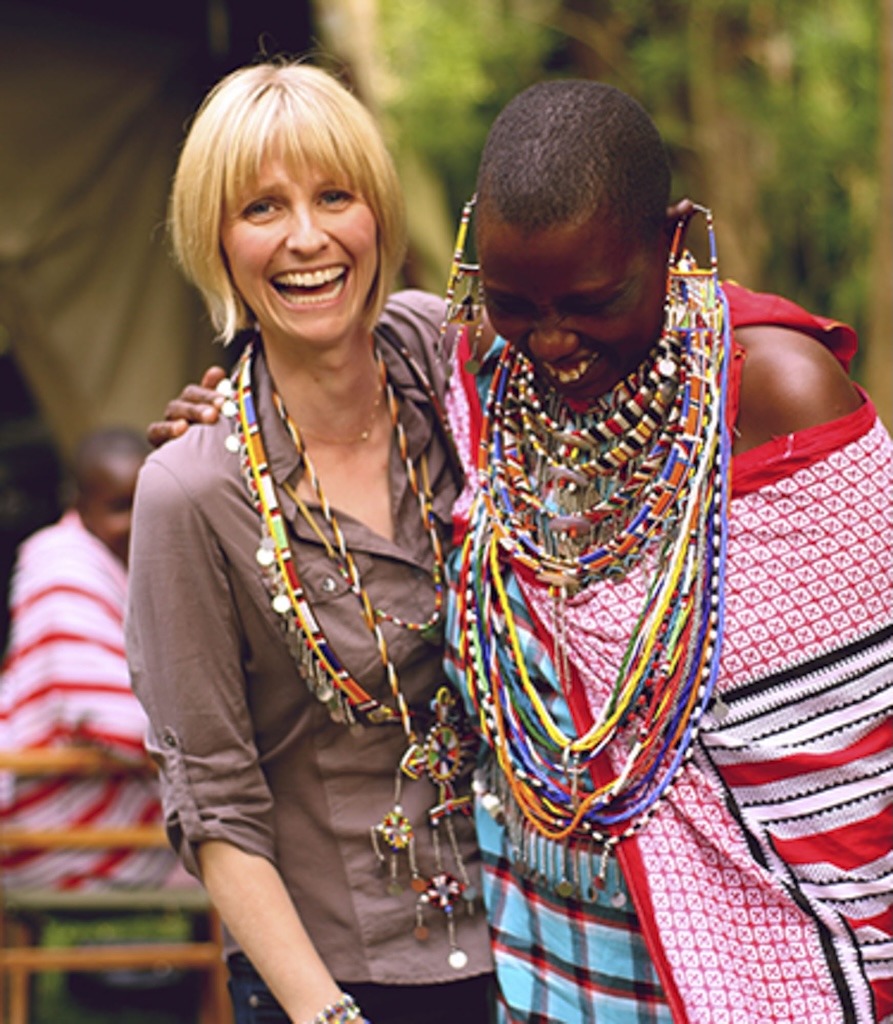
She made a list. Things she wanted to do again. Things she didn’t. And she started asking a new question: what would Act 2 look like?
The answer came from something she noticed while winding down the bracelet project. Every country where they had run artisan programs was also a coffee-growing country. The women she had worked with for years were living alongside some of the world’s most important coffee farming communities. She had relationships, she had knowledge, and she had a clear-eyed view of what hadn’t worked the first time.
She calls it “from beans to beans.” I find that phrase quietly brilliant.
AndBack Coffee was built from those lessons. It sources exclusively from women-led and women-inclusive cooperatives. It invests back into those communities through agricultural training, financial literacy programs, and environmental initiatives, including an indigenous bee project in Ecuador that Roxanne describes with the kind of specificity that tells you it isn’t a footnote in a press release, it’s something she actually cares about. The goal, in her words, is dignified and prosperous futures in coffee farming. Not charity. Infrastructure.
The 90-Cent Fact That Reframes Everything
Roxanne shared a statistic in our conversation that has been on my mind for awhile now. For every dollar a woman earns in the Global South, 90 cents goes back to her children, her household, and her community. Not to herself. Back. This is why investing in women’s income isn’t a nice thing to do. It is the most efficient economic intervention available, and it has been documented across decades of research.
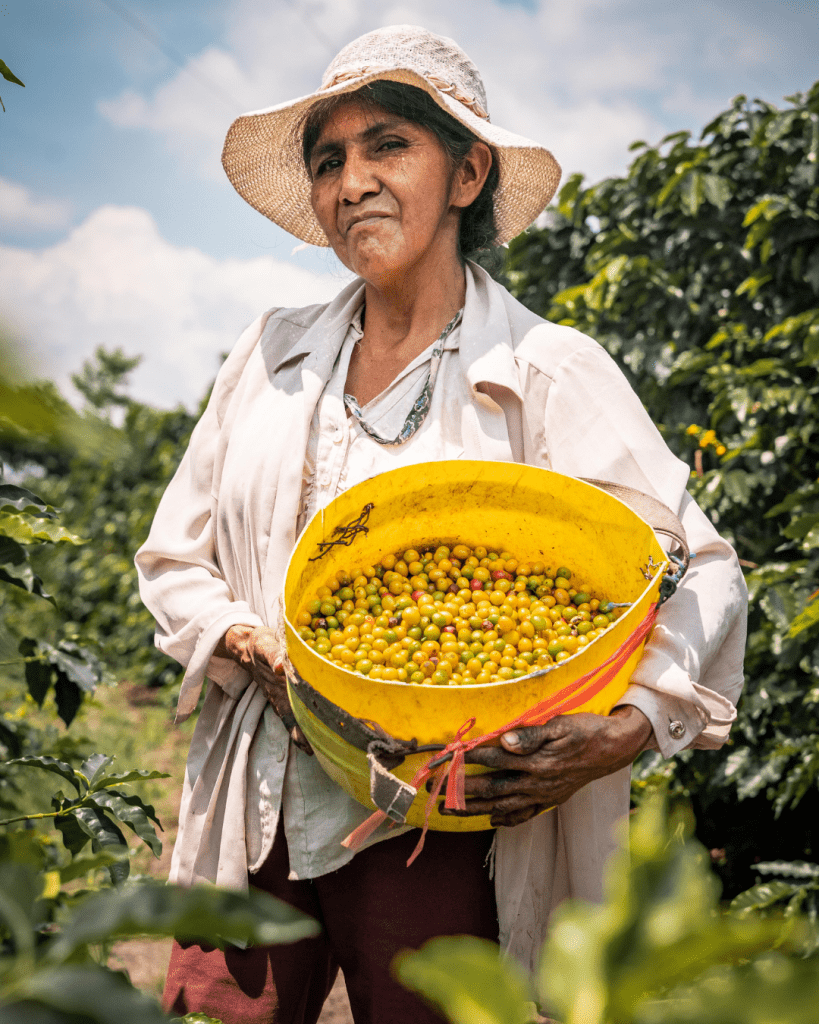
AndBack’s entire model is built around that fact. Getting coffee into offices, hotels, airlines, and now into the hands of consumers who want to know where their money actually goes.
I spoke with Roxanne at length about all of it, from the structural barriers women coffee farmers face to what her own daily coffee ritual looks like. The full conversation is below.
Who Profits While Ethical Coffee Brands in Canada Do the Work Differently
Before we get to what you can do, let’s talk about who has been doing very well out of this system for a very long time.
Most of the coffee sitting in Canadian kitchens right now flows through two corporate empires. The first is Nestlé, which is quite literally one of the most evil corporations on earth. Don’t believe me, look up what they did to nursing mothers in Africa before you come at me, and if you’re circling back to say “well times have changed”. Um, have they really? Nestlé owns Nespresso, Nescafé, and holds the licence for Starbucks grocery and capsule products.
The second is JAB Holding, a private Luxembourg-based firm owned by Germany’s Reimann family, and one that almost nobody has heard of despite controlling a significant share of what the world drinks every morning. Their brands include Tassimo, Jacobs, Douwe Egberts, Senseo, L’OR, Kenco, and Carte Noire. In 2019, the family was revealed to have been enthusiastic supporters of Adolf Hitler and to have profited from forced labour during World War II. They donated ten million euros to Holocaust survivors in response. Ten million euros, from a family whose net worth runs into the tens of billions built on the backs of slave labour.
I am not telling you this to add to the pile of guilt you already carry as a consumer. I have written at length about how exhausting it is to try to be ethical in a capitalist system that is not designed for it, and I meant every word. If you are stretching a grocery budget, or surviving an impossible month, or just trying to get through the week: your coffee choices are not the problem. The system that puts these corporations in control of the global supply chain while paying farmers almost nothing is the problem. That guilt belongs with the billionaires burning the planet, not with you.

But if you are in a position to choose, here is what I can tell you.
AndBack Coffee is available here and it is genuinely good coffee, I have served it to women on for Girl Trips and watched the pot empty faster than any other item on the table. Roxanne’s team will also set it up in your workplace if you want to bring it there. That is a meaningful shift, not because it saves the world, but because it is one place where your money goes directly to a model that actually works for the women growing it.
And if you cannot swing that right now, at the very least you now know whose brands to recognise on a shelf, and whose to put back.
Other Ethical Coffee Brands in Canada
Also worth knowing
Other ethical Canadian coffee brands
Sources exclusively from farms owned by Indigenous women in the Andes of Peru. Donates 15% of each online sale to a Canadian women’s shelter or sexual assault centre of the purchaser’s choice.
Direct trade partnership with the Las Rosas Women’s Group, a collective of 400+ Colombian women coffee farmers. Available in over 2,000 Canadian grocery stores.
Canada’s first fair trade organic coffee roaster since 1995. Worker-owned co-op out of Wolfville, Nova Scotia. Sources exclusively from small-producer-owned cooperatives.
100% fair trade certified and organic, roasted in Vancouver. Full origin traceability on every bag.
Certified organic and fair trade for over 25 years, roasted in Invermere, BC. Widely available across Canada.
None of these will cost you more than a specialty coffee already does. All of them are a better choice than reaching for a Tassimo pod.
Frequently Asked Questions
Yes. AndBack Coffee is available directly through andbackcoffee.com for individual consumers across Canada. The brand also works with offices, hotels, and corporate clients who want to bring ethical, woman-powered coffee into their workplace. You can reach the team through the website.
An ethical coffee brand prioritises fair compensation for farmers, transparent supply chains, and reinvestment into farming communities. When you’re looking at ethical coffee brands in Canada specifically, fair trade certification is one marker, but it is not the only one. Brands like AndBack go further by sourcing specifically from women-led and women-inclusive cooperatives, providing agricultural and financial literacy training, and funding environmental initiatives in the regions where their coffee is grown.
In most coffee-growing regions, women face systemic barriers that limit their earnings: lack of land title, restricted access to banking and credit, and exclusion from cooperative leadership. Because they often cannot formally own the land they farm, they cannot use it as collateral to access financing or investment. Initiatives that address land rights alongside income training, as AndBack does, are considered among the most effective interventions in the sector.
Coffee grows within a specific temperature range along the equatorial belt. Rising global temperatures are shrinking viable growing regions and increasing the frequency of extreme weather that damages crops. If coffee farming becomes less profitable or less viable, farmers will switch to other crops, threatening global supply. Supporting brands that invest in sustainable farming practices and farmer livelihoods is one way consumers can contribute to the long-term future of coffee.
Woman-powered coffee is a term used to describe coffee that is sourced from cooperatives where women are meaningfully included or in leadership, paid fairly, and supported through training and investment. AndBack Coffee, founded by Canadian social entrepreneur Roxanne Joyal, uses this model to ensure that the women growing their coffee benefit directly from its success, rather than simply providing labour within a system that extracts value from their work.