Oh no, not horror again. Anne Brodie takes one for the team with this Boorman and the Devil review.
John Boorman is the director behind two of the most highly regarded films of their era. Point Blank (1967) and Deliverance (1972) were both box office hits focused on men trapped in mortal danger, and both cemented Boorman’s reputation as a filmmaker of serious power and vision. Then came the phone call that would haunt him for decades.
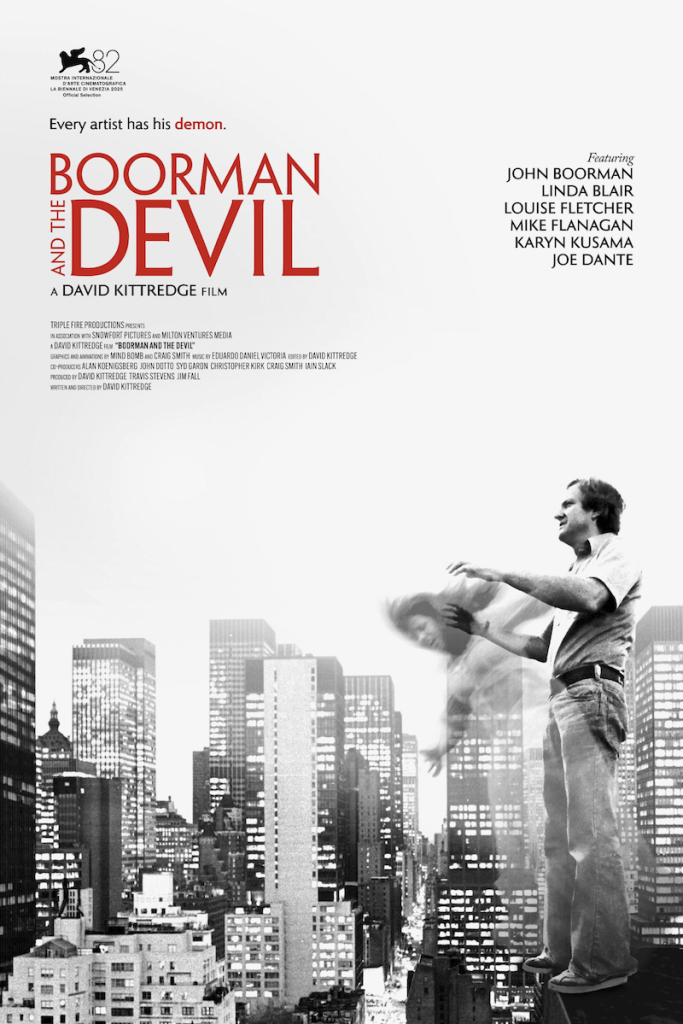
In 1973, William Friedkin’s The Exorcist was released. It was so visceral, so horrifying, and so extreme that it became a global sensation. Ambulances were called to theatres to help badly shocked moviegoers. It earned ten Oscar nominations and made a staggering amount of money. A couple of years later, Boorman was asked to direct its sequel, Exorcist II: The Heretic.
He had grave concerns from the start.
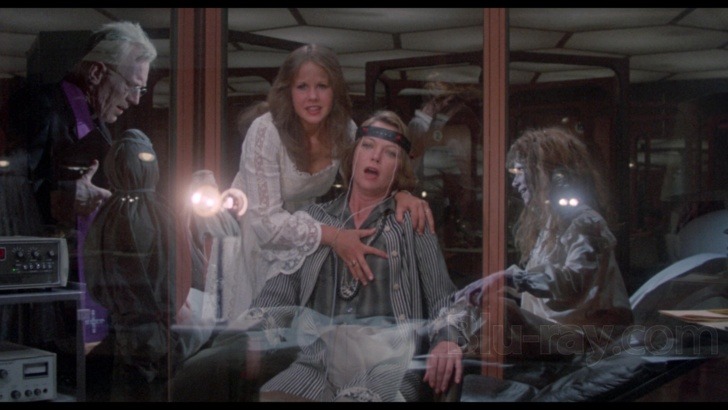
What Went Wrong With Exorcist II
Linda Blair, returning as the possessed girl at the centre of the original, was unreliable. Boorman did not like the script. He made 125 changes before agreeing to proceed, and the shoot was plagued with problems from the beginning. The media claimed the production was cursed. Richard Burton, cast as a priest sent to investigate the death of the original exorcist, had to leave early to shoot Equus in Toronto. Louise Fletcher’s husband became seriously ill. The Vatican refused to grant approval. The original house from the first film was unavailable.
Boorman’s creative vision for the film was singular and deliberately unsettling, a palette stripped of blue and green, focusing instead on pallid yellows and grey, while the story explored ESP, transference, and something he called synchronised hypnosis. It was ambitious, strange, and completely unlike what audiences expected from an Exorcist sequel.
They hated it. It flopped catastrophically.
Whatever Happened to Linda Blair?
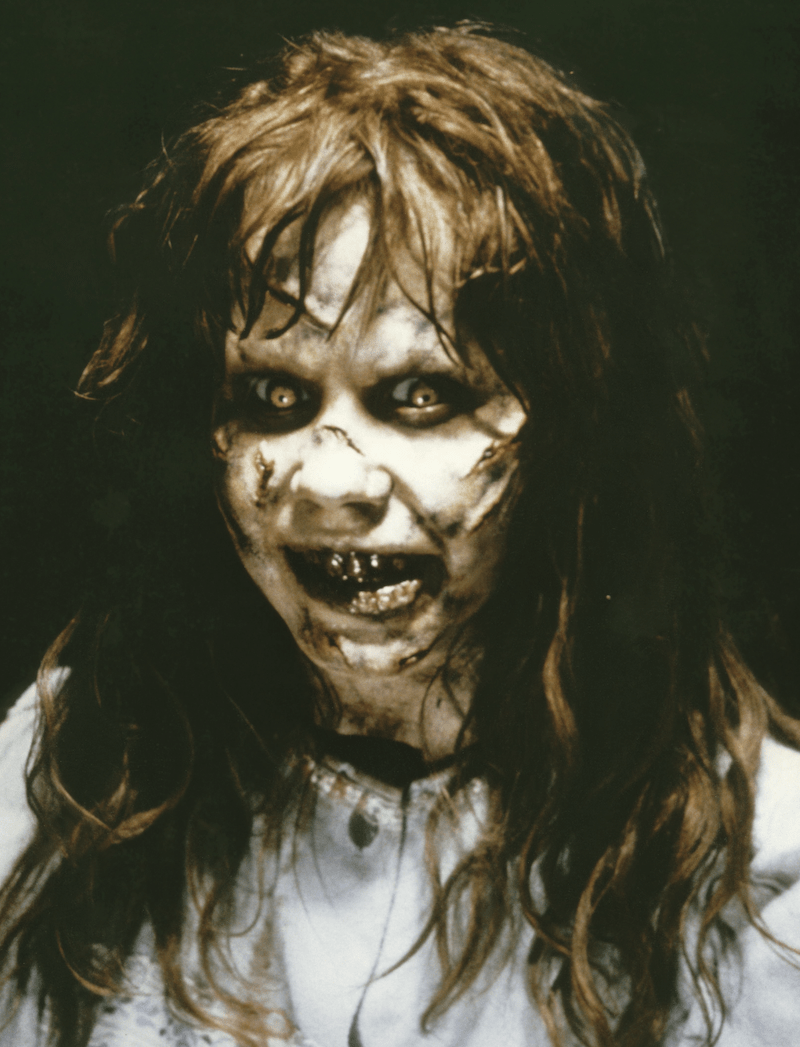
Linda Blair was fourteen years old when The Exorcist was released in 1973. Her performance as the demon-possessed Regan MacNeil earned her an Academy Award nomination for Best Supporting Actress and made her one of the most recognisable faces in the world overnight. She was a child.
What followed was a masterclass in Hollywood’s capacity to chew up and spit out the people it makes famous. Blair was typecast almost immediately, returning for Exorcist II: The Heretic in 1977 and spending much of the late seventies and eighties in low-budget horror and exploitation films that traded almost entirely on her association with The Exorcist.
In 1977 she was arrested for cocaine possession and pleaded guilty, receiving three years probation. The headlines were brutal. She later spoke openly about the pressures of fame at such a young age and the lack of any real support system around her.
Blair stepped back from Hollywood in the 1990s and redirected her energy toward animal rescue, founding the Linda Blair WorldHeart Foundation, a nonprofit dedicated to rescuing and rehoming animals. She has been one of the most committed and vocal animal welfare advocates in the industry for decades.
She is 65 years old. She has spoken candidly about the cost of what happened to her as a child in Hollywood, and about finding genuine purpose and peace outside of it. The animals, she has said, saved her right back.
Boorman and the Devil Review: What the Documentary Does Well
What makes Boorman and the Devil so compelling is watching Boorman reckon with that failure honestly and without self-pity. He beats himself up thoroughly. He takes the blame for the film’s massive box office disaster. And then, in the same breath, he shares his genuine passion for the project and his undiminished love for the craft of filmmaking.
That tension is the heart of the documentary. It flopped badly, big time, and he knows it. He is also proud of it. Such is the life of a Hollywood creator driven by passion rather than formula.
In the end, Boorman and the Devil is less about Exorcist II and more about what it means to make something you believe in and watch it fail publicly. It is a meditation on success and failure, on the seductive and sometimes brutal magic of filmmaking, told by someone who has lived both sides of it.
A whale of a tale and an extraordinary documentary.
Editor’s Note
Personally, I can’t watch horror movies. I simply cannot. If you can, I’m proud of you babe. Here are ten films guaranteed to scare the living bejeesuz out of you. I’ll just be over here under the covers, with my fingers in my ears.
- The Exorcist (1973) — The one that started all of this. Still terrifying fifty years later.
- Hereditary (2018) — Ari Aster’s debut is the most genuinely disturbing film of the last decade. You have been warned.
- The Shining (1980) — Kubrick and Nicholson. A haunted hotel. Sleep well.
- Rosemary’s Baby (1968) — Mia Farrow alone in a New York apartment wondering if her neighbours are a satanic cult. They are.
- Get Out (2017) — Jordan Peele’s masterpiece. The horror is both supernatural and entirely real.
- The Babadook (2014) — Australian horror at its finest. Grief as a monster. Genuinely unsettling.
- Midsommar (2019) — Ari Aster again. Horror in broad daylight. Somehow worse.
- A Quiet Place (2018) — You cannot make a sound or you will die. The tension is almost unbearable.
- The Witch (2015) — Puritan New England. A family unraveling in the woods. Slow burn dread at its finest.
- Sinister (2012) — Ethan Hawke finds a box of home movies in his attic. Do not watch this one alone.